Majestic Bangalore Overview – Map Location, Property Rates, Hotels & Connectivity
December 31, 2025
Every time someone says Majestic Bengaluru Karnataka, I don’t know why, but my brain instantly plays that background noise of…

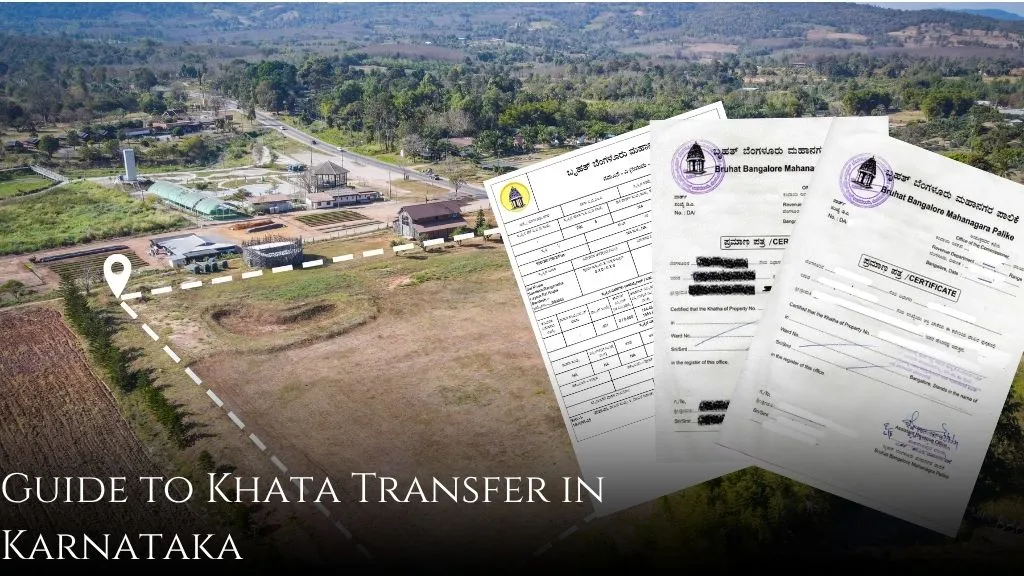
So, you finally signed the sale deed, paid the stamp duty, and got the keys to your new place in Bangalore or Mysore. You probably feel like you can finally put your feet up and relax, right? Well, not quite. I remember when my cousin bought a flat in Whitefield, he thought the registration at the Sub-Registrar’s office was the finish line. A year later, he tried to pay his property tax and realized the government still thought the previous owner lived there.
That’s where khata transfer comes in. If registration is like getting married, then Khata is like updating your name on the ration card and bank account, it’s the paperwork that actually makes you “exist” in the eyes of the local municipality. Without it, you’re basically a ghost in your own home. Let’s break down exactly what is khata transfer and how to get it done without losing your mind.
In Karnataka, a “Khata” is an account or a record that identifies who is responsible for paying property tax for a specific piece of land or building. When you buy a property, the tax records don’t update themselves automatically (I wish!).
Khata transfer is the legal process of moving that tax record from the seller’s name to your name. It’s mandatory. If you don’t do it, you can’t get a building plan approved, you can’t get a water connection, and most importantly, you’ll have a nightmare of a time trying to get a home loan later.
Before we talk about the khata transfer process, you need to know what kind of property you have.
Don’t go to the BBMP or local ward office empty-handed. You’ll just end up making three trips for no reason. Here is the list of documents required for khata transfer that you should keep ready in a folder:
| Document | Purpose |
| Registered Sale Deed | Proof that you actually bought the property. |
| Mother Deed | The history of the property ownership. |
| Encumbrance Certificate (EC) | Proves the property has no legal “burdens” or pending loans. |
| Latest Property Tax Receipt | Proves the seller paid their dues up to date. |
| Previous Khata Certificate | The original document in the seller’s name. |
| Occupancy Certificate (OC) | If you’re the first owner of a new apartment. |
| ID Proof | Aadhaar and PAN are usually enough. |
If you are dealing with agriculture land in karnataka, you might also need the RTC (Pahani) and Mutation records. These are a bit different from city flats but just as important for a smooth khata transfer.
Nothing in life is free, and neither is updating government records. The khata transfer charges are usually calculated based on the value of the property.
The cost is normally 2% of the stamp duty amount specified in your selling deed in Bangalore (BBMP). So, if you paid ₹5 Lakhs in stamp duty, your khata transfer fee would around ₹10,000.
If you’re buying agriculture land in karnataka, keep in mind that the agriculture land registration charges in karnataka are separate from the khata fees. Always keep a buffer of about 1% of your property value for these miscellaneous “administrative” costs.
You can do this online through the Sakala portal or offline at a Bangalore One center. Here is how the khata transfer process usually goes:
If your dream is to own a farmhouse, the rules for agriculture land in karnataka are slightly more strict. You need to ensure the land is not under any “litigation” and that the agriculture land registration charges in karnataka were paid correctly by the previous owner. If the previous mutation (name change) wasn’t done properly, your khata transfer will get stuck indefinitely.
I know, I know, after spending lakhs on a house, the last thing you want to do is chase officers for another certificate. But trust me, a khata transfer is the only thing that gives you total “legal peace of mind.”
Make sure you clear all pending property taxes before you apply, or the system will reject your application instantly. If you’re feeling overwhelmed, there are services that can help you pull up old records or verify your documents required for khata transfer in a few clicks.