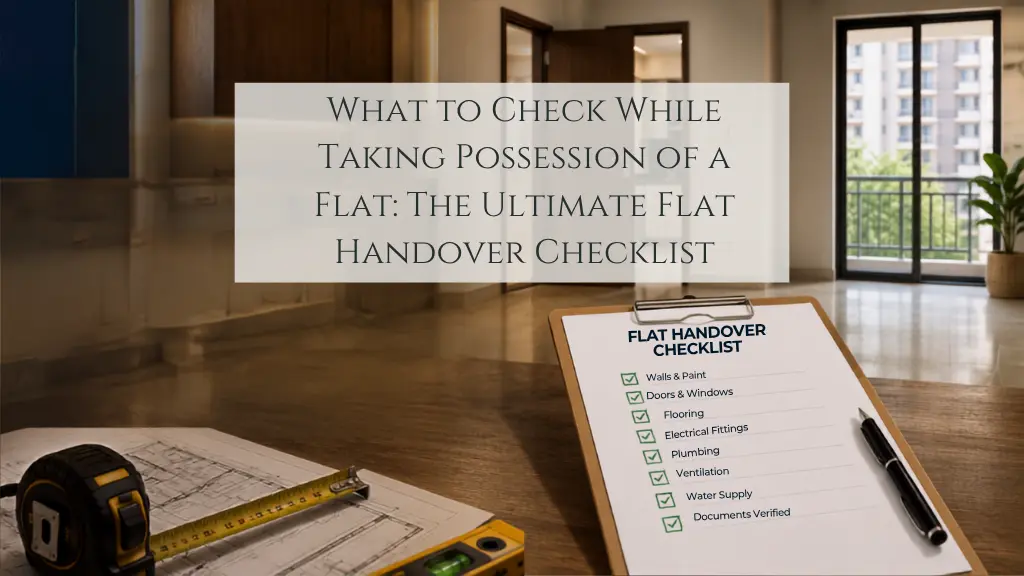
The day you receive your offer of possession letter is a massive milestone for any homebuyer. But stepping onto the site with a box of mithai and signing the papers without a proper flat handover checklist is the single biggest mistake you can make.
Once you sign the final handover sheet, your leverage drops dramatically. Before planning your Griha Pravesh, treat this home possession milestone like a strict property audit. Going through a detailed apartment handover checklist—and keeping a strict checklist for flat handover handy, is the only way to protect your money and catch costly defects before taking those keys.
Before you inspect a single brick, ensure the legal foundation of your new home is bulletproof.
Occupancy Certificate (OC): The non-negotiable proof that the local civic body approved the building for habitation. Never accept key handover on a temporary or pending OC.
Possession Letter & Key Handover Letter: Formal documents from the developer confirming physical transfer of the property.
Car Park Allotment Letter: Ensures your designated parking spot (covered or open) is officially assigned to your flat.
Appliance Warranties: Keep a dedicated digital folder for all guarantee/warranty documents for white goods (geysers, exhaust fans, video door phones) provided by the builder.
Fit-Out Deposit & Indemnity Letter: Usually required if you plan custom interior work. Protect your refundable security deposit by documenting the flat’s initial state.
Step 2: On-Site Inspection (Bring These Tools)
Forget complex equipment. You can do a reliable physical walkthrough using items you already own:
Phone Charger: Plug it into every socket to test live power flow and grounding.
Glass Marble or Coin: Drop it on balcony, utility, and bathroom floors to check the drainage slope.
Bucket of Water: Pour it down the floor traps (nahani traps) to test for blockages.
What to Audit Room-by-Room:
Flooring & Tiles: Tap tile centers with your knuckles or a wooden rod. A hollow sound (khad-khad) means improper cement leveling, which causes tile cracks down the road.
Plumbing & Seepage: Turn on all taps simultaneously to check water pressure. Look closely at wall corners, window sills, and bathroom joints for hidden moisture or bubbling paint.
Doors & Windows: Check latch alignment, locks, and rubber sealing on UPVC/aluminum windows.
Safety Features: Locate the internal fire sprinklers, test the intercom connected to security, and check safety railings on high-rise balconies.
RERA Carpet Area: Take a quick laser measure or tape measurement to verify that the usable room dimensions match your original agreement.
Understanding how ownership differs from home possession protects your long-term rights before you sign any flat handover checklist:
Ownership (Title Holder): Proven through a registered Sale Deed. Gives you the legal right to sell, transfer, or mortgage the home.
Possession (Occupancy Rights): Granted after completing your apartment handover checklist, giving you physical control to move in.
Taking physical home possession without valid title documents leaves you legally exposed. Make sure your checklist for flat handover covers both registered ownership and physical key transfer.
How to Handle Issues
When you find defects during your walkthrough, follow this process:
Document Everything: Take high-resolution photos and videos showing the defect and its location.
Create a Written Snag List: Consolidate all minor and major issues into a clear document.
Get Site Sign-Off: Hand the snag list to the site engineer and get a signed acknowledgment with a committed timeline for rectifications before accepting your final key handover.
Maintenance, Corpus Fund & Meter Charges
When you sign that flat handover checklist, your initial financial obligations don’t stop at the property cost. Builders collect several advance charges before handing over the keys, and you need to verify where that money is going.
Advance Maintenance Charges: Developers usually charge 1 to 2 years of maintenance upfront. Ask for an itemized breakdown showing what services this covers until the Resident Welfare Association (RWA) takes over.
Corpus / Sinking Fund: This is a one-time non-refundable deposit meant for major long-term structural repairs. Ensure you get an official payment receipt explicitly stating this will be transferred to the society’s bank account.
Electricity & Water Meter Transfer: Check if individual electricity meter installation charges and BWSSB/BMC water connection deposits are included in your final bill, or if you need to apply for meter transfer independently.
How to Claim Interest Before Signing
If your developer missed the committed home possession date mentioned in your original agreement, do not let them off the hook during key handover.
RERA Compensation Rights: Under RERA rules, if the builder delays completion without a valid force majeure reason, you are legally entitled to claim monthly interest for every month of delay until actual physical handover.
The “No-Dues” Trap: Watch out for sneaky clauses in the final possession letter stating “the buyer waives all rights to delay compensation.” Do not sign this clause. State in writing that you are taking physical key handover while reserving your legal right to claim delay interest through your state’s RERA authority.
What to Do If You Spot Major Snags
What happens if you complete your apartment handover checklist and find major structural flaws, but the site engineer refuses to fix them?
Defect Liability Period (DLP): Under Section 14(3) of RERA, the developer is legally bound to repair any structural defect, poor workmanship, or quality issue reported within 5 years of taking possession, free of cost within 30 days.
Issue an Official Legal Notice: If minor snags aren’t rectified before your move-in date, send a formal email and registered letter detailing the pending items from your original checklist for flat handover.
Escalate to RERA Complaints Cell: If the builder ignores your written snag list or demands extra money for basic rectifications, file an online complaint on your state’s RERA portal using your signed inspection photos as evidence.
Taking possession is the crucial bridge between buying a property and making it your home. Exercise your rights during the walkthrough to ensure your new space is safe, fully compliant, and truly ready for move-in.
Flat handover checklist FAQ’s:
1. What is the difference between an Offer of Possession and a final Possession Letter?
An Offer of Possession is an official notice sent by the developer informing you that your unit is ready and requesting final dues. A Possession Letter is the legal document signed by both parties after clearing dues and verifying your checklist for flat handover, officially transferring physical occupancy rights to you.
2. Can I refuse to accept home possession if there are unresolved defects?
Yes. If you spot major structural issues, active seepage, missing electricity meters, or a pending Occupancy Certificate (OC), you can refuse key handover. Issue a written flat handover checklist detailing the defects and demand rectification in writing before signing the final acceptance sheet.
3. Is an Occupancy Certificate (OC) mandatory before signing an apartment handover checklist?
Absolute 100% yes. Moving into a property without an OC issued by the local civic body makes your residence legally unauthorized. It can lead to disconnection of basic municipal water and electricity lines, heavy municipal fines, and severe complications during future property resales.
4. What tools should I carry for a physical home possession inspection?
Carry a simple mobile charger (to test power sockets), a glass marble (to verify balcony and bathroom floor drainage slopes), a tape measure (to check RERA carpet area), a flashlight (for dark plumbing ducts), and a notepad or phone to take photos for your checklist for flat handover.
5. How long is the builder liable for structural defects after flat handover?
Under RERA Section 14(3), the developer carries a 5-year Defect Liability Period (DLP) starting from the date of physical home possession.
Posted by
Akshata Joshi
Akshata Joshi is a content writer with over three years of experience in the real estate field, specializing in crafting clear and engaging real estate insights. With a keen eye for detail and a passion for research, she delivers informative content that resonates with readers. When not writing, she enjoys exploring new places, reading books, and unwinding with music.
Connect her on Instagram