15+ Modern Bathroom Accessories Names List with Pictures: Ultimate Indian Home Essentials Guide
September 9, 2026
Your bathroom might be one of the smallest spaces in your house, but let’s be honest, it holds the biggest…

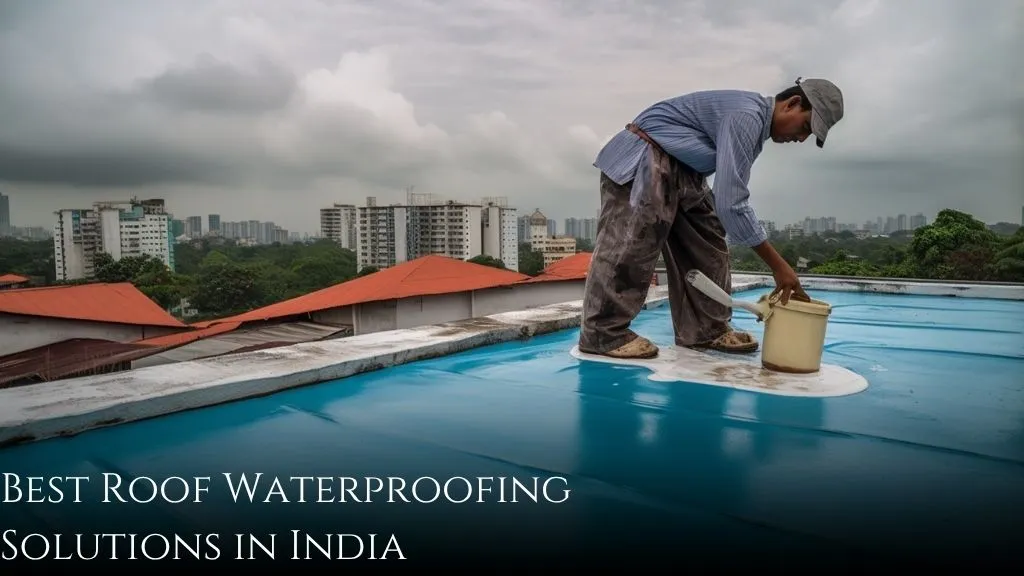
I still remember the first monsoon I spent in my new house. It was perfect, the smell of the rain, a hot cup of chai, and then… drip. Right on my favorite rug. I looked up and saw that dreaded yellow patch forming on the ceiling. I realized then that I’d spent all my money on fancy interiors but completely ignored the one thing that actually keeps a home together- roof waterproofing.
In India, we don’t just get rain, we get a seasonal assault of water followed by 45°C heat that cracks even the strongest concrete. If you’re seeing damp patches on your walls or wondering how to stop roof leaks before the next big storm, you’re in the right place. Let’s talk about how to turn your roof into a fortress without losing your mind.
Most of us wait until the ceiling leakage solution becomes an emergency. But by the time you see a drop, the water has likely already reached your TMT bars and started the rusting process.
Roof waterproofing is basically an insurance policy for your structure. It’s not just about stopping water; it’s about heat reflection too. A good leakage waterproofing layer can actually keep your top-floor rooms a few degrees cooler during those brutal May afternoons.
Not all roofs are the same. A flat terrace in Bangalore needs a different approach than a sloping roof in Kerala. Here’s a breakdown of the most common waterproofing material for roof choices in India:
| Method | Best For | Why Choose It? |
| Brickbat Coba | Traditional Terraces | Good for heat insulation and old-school reliability. |
| Liquid Membrane | Modern Flat Roofs | Forms a seamless, rubber-like “skin” over your roof. |
| Bituminous Coating | Low-slope Roofs | Very tough, but can get sticky in extreme Indian heat. |
| Polyurethane (PU) | High-Traffic Terraces | Extremely durable and handles “walking” on the roof well. |
I get asked this a lot: “Can I just paint over the leak?” Well, yes and no. A standard wall paint won’t do anything. But specialized roof leak paint (like Berger’s WeatherCoat RoofGuard) is actually a thick, elastic coating. It stretches when the roof expands in the heat and contracts when it cools down at night. If you have tiny hairline cracks, a high-quality roof leak proofing paint is a lifesaver.
However, if you have deep cracks (more than 5mm), you need a “Sealant” first, to act like a permanent band-aid for those gaps before you apply the final leakage waterproofing layers.
If you’re a hands-on “Property Geek” like me, you want to know the process. Even if you hire a professional, make sure they follow these steps for proper roof leak proofing:
In India, our roofs bake all day. I highly recommend picking a waterproofing material for roof that has “Solar Reflective” properties. This saves you a massive chunk of money on AC bills. It’s a win-win!
Let’s do the math. A proper roof waterproofing job might cost you a bit upfront, but it’s 1/10th the cost of fixing a damaged ceiling, repainting your entire house, or, god forbid, fixing structural cracks caused by rusted iron rods.
If you’re seeing dampness, don’t just ignore it. That small patch is just the tip of the iceberg. Start looking for the right waterproofing material for roof today and give your home the “raincoat” it deserves.