Different Types of Rain Gutters Explained: Pros & Cons, Materials, Styles & Uses
February 13, 2026
Nobody actually wants to spend their Saturday morning thinking about gutters. Usually, we only notice them when it’s pouring rain…

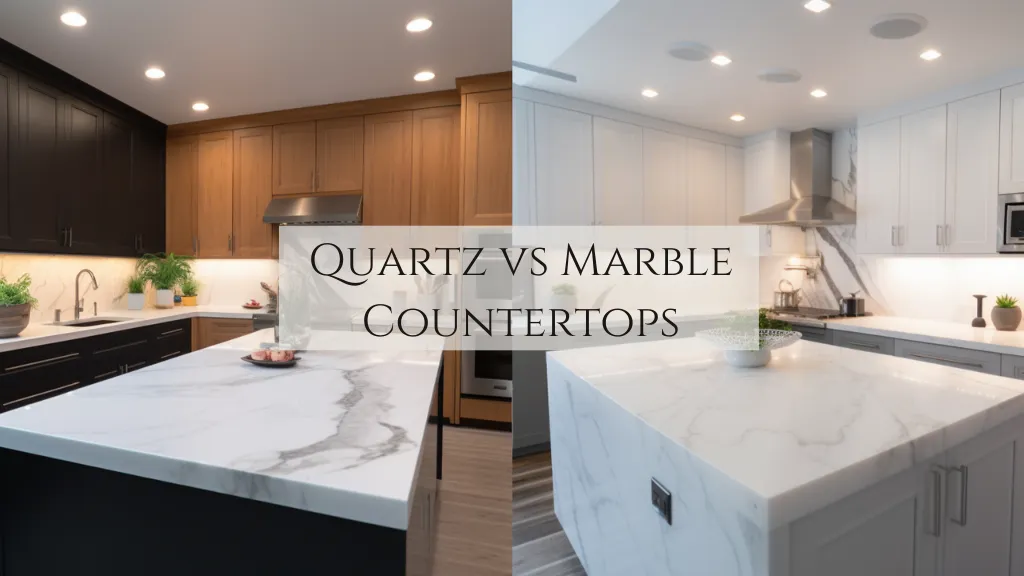
Deciding between a quartz vs marble countertop for your 2026 kitchen remodel is more than just a design choice, it’s a lifestyle investment. Whether you’re a serious home baker who needs a cold surface or a busy parent who needs a “spill-proof” life, the difference between quartz and marble can make or break your kitchen’s daily flow.
In this comprehensive guide, we’ll dive deep into why one might be your perfect match while the other might be a maintenance nightmare.
Before we dig into the details, here is a quick-hit comparison of how these two heavyweights stack up in today’s market.
| Feature | Marble (Natural Stone) | Quartz (Engineered Stone) |
| Origin | 100% Natural Metamorphic Rock | ~93% Quartz Mineral + 7% Resin |
| Durability | Soft, prone to scratches (Mohs 3) | Very Hard, scratch-resistant (Mohs 7) |
| Maintenance | High (Needs sealing every 6 months) | Low (Never needs sealing) |
| Heat Resistance | Excellent (Naturally cold) | Moderate (Resins can scorch >300°F) |
| Pore Structure | Highly Porous (Stains easily) | Non-Porous (Stain-resistant) |
| Best For | Luxury focal points, baking zones | High-traffic family kitchens |
If you want low maintenance, durability, and modern looks → Quartz wins
If you want luxury aesthetics and natural uniqueness → Marble wins
But the real answer depends on lifestyle, budget, and how much drama you can tolerate in your kitchen
Understanding the difference between quartz and marble is step one.
This basic origin difference explains almost everything else in the marble vs quartz countertops debate.
When discussing quartz vs marble, the conversation always starts with “The Look.”
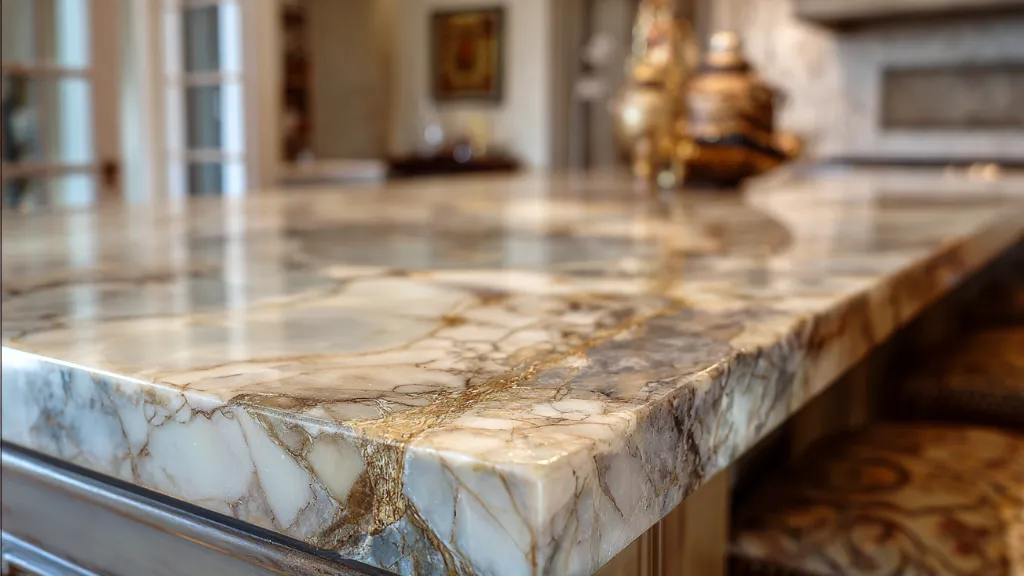
Marble is nature’s artwork. Since it’s quarried directly from the earth, no two slabs are identical. You get unique “veining”, the grey, gold, or green streaks formed by mineral impurities over millions of years. For many, the “patina” (the way marble ages and wears) is a desirable character trait, much like a well-worn leather jacket.
In 2026, quartz countertops vs marble have reached a level of mimicry that is staggering. High-end brands now use “Nano-Ink” technology to print deep, realistic marble veins into the quartz. However, because it’s engineered, the pattern is consistent. If you are doing a large “L-shaped” kitchen, quartz makes it much easier to hide the seams.
If you have kids, pets, or a habit of hosting wine nights, you need to know which is better quartz or marble when things get messy.
Yes and no. It is incredibly heat-resistant, but it is physically soft. On the Mohs scale of mineral hardness, marble sits at a 3. This means dropping a heavy cast-iron skillet could chip it, and sliding a ceramic pot could scratch it.
Quartz is one of the hardest minerals on earth, sitting at a 7 on the Mohs scale. It is nearly impossible to scratch with common kitchen tools. However, its Achilles’ heel is heat. Because quartz is held together by polymer resins, placing a boiling pot directly on the surface can cause “thermal shock” or permanent yellowing/scorching.
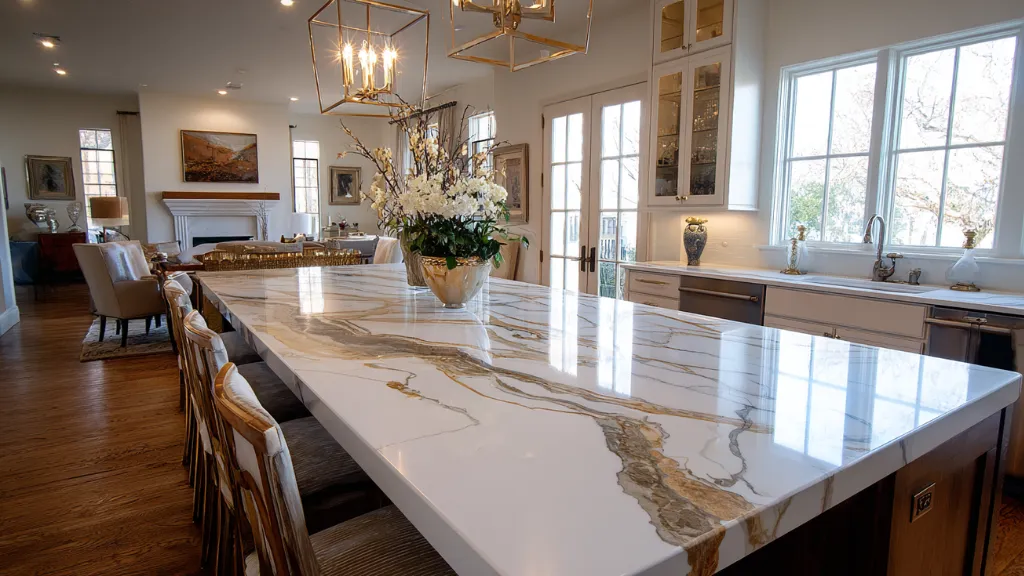
This is the question every homeowner asks: is marble more expensive than quartz?
The answer in 2026 is: Usually, but not always.
While the “upfront” difference between quartz and marble might be small for mid-range options, marble becomes significantly more expensive over time due to professional sealing and the specialized cleaners required to prevent damage.
The biggest factor in the marble vs quartz countertops debate is the chore list.
For those who love the “cool” feel of marble for rolling out pastry dough, consider a marble-topped kitchen island for baking and quartz countertops for the high-spill areas around the sink and stove!
Both require professional installation, but there are differences.
Marble demands more craftsmanship because no slab is uniform.
Quartz is easier to fabricate because it’s consistent.
So in difference between quartz and marble, quartz is often considered more sustainable.
One of my friends installed white marble in her kitchen because Pinterest told her so. Six months later, coffee stains, lemon etching, panic. She now uses trays for everything
Another friend installed quartz. Three years later, still looks brand new. So yeah, quartz vs marble is not just aesthetics, it’s lifestyle.
As we move further into 2026, the market share for quartz vs marble countertops is leaning heavily toward quartz. Why?
In luxury real estate listings, marble still signals premium living.
In mid-range and rental homes, quartz is preferred for durability and low maintenance.
So developers today often use:
Smart strategy, honestly.