Difference Between Kutcha & Pucca Houses: Features, Materials Used, Pros & Cons
September 16, 2026
The difference between a kutcha house and a pucca house mainly depends on the materials used to construct the walls…

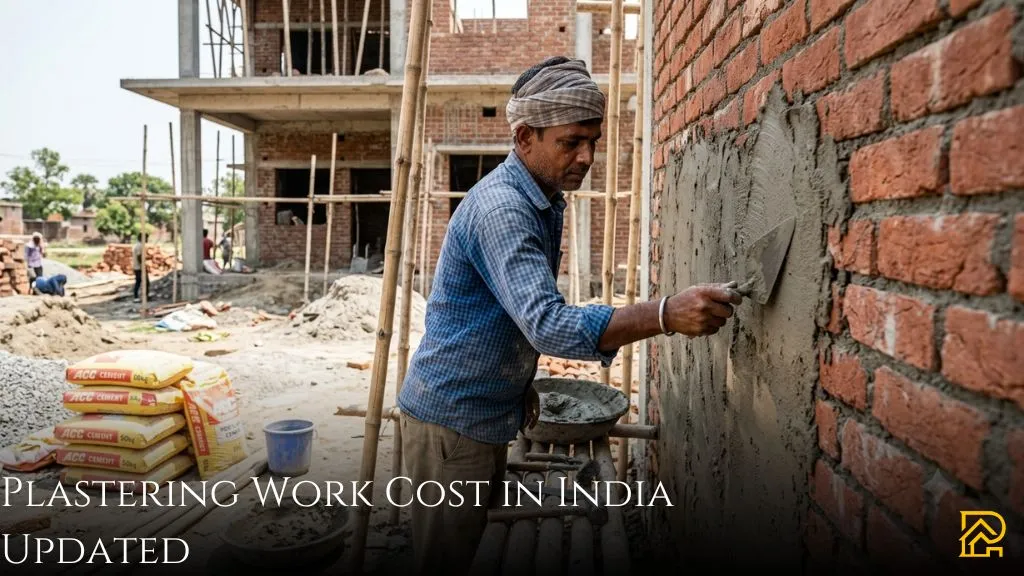
When you are building your dream house, you spend weeks picking out the perfect modular kitchen tiles or the exact shade of “warm beige” for the living room. But honestly? Nobody really sits down and obsesses over plastering work. It is just treated like a minor, boring item on the contractor’s checklist.
But plastering is the literal skin of your house. If the plaster work in construction is messy, even your ₹10,000 premium paint will end up looking wavy, patchy, or worse, cracking open in two seasons.
Another huge headache? One contractor tells you ₹25 per sq ft, and another quotes ₹40. Why the massive gap for the exact same wall? It drives people crazy! This guide is going to break down the actual plastering work rate per square feet, material vs labour splits, hidden factors, and even some new tech like machine plastering. Let us get into it.
Plastering is putting a layer of cement and sand over your raw brick or block masonry walls. It gives you a smooth surface to paint on and shields the brickwork from falling apart. But timing is everything here. You can’t just rush into it. It has to happen strictly after your brickwork is done and your electrical conduits and plumbing lines are deeply chiseled and fixed into the walls.
We generally divide plastering in construction into two main buckets:
When you get a quotation for a plaster cost per square foot, it usually changes based on thickness and location. Internal walls don’t need a heavy coat, but external ones definitely do.
Here is a breakdown of what plastering in india looks like right now in terms of pricing:
| Type of Plaster | Standard Thickness | Average Rate (per Sq Ft) | What is Included? |
| Internal Wall Plaster | 12 mm | ₹25 – ₹35 | Cement, sand, basic labour, scaffolding setup inside |
| External Wall Plaster | 15 – 20 mm | ₹30 – ₹45 | Richer mix, extra curing, outer high-rise scaffolding |
| Ceiling Plaster | 6 mm | ₹20 – ₹28 | Thin coat, highly skilled manual labor to avoid drops |
Note: These rates can fluctuate depending on which city you’re building in (Bangalore or Mumbai might cost slightly more than tier-2 towns because of sand transport regulations).
Sometimes you want to buy the cement and sand yourself because you don’t trust the contractor’s quality. Fair enough! If you are hiring only masons for the plastering work, the labour rates change quite a bit between internal and external surfaces:
If someone quotes you crazy cheap labour like ₹8 or ₹9, run away. Bad masons will give you uneven lines, and you’ll end up spending double the money on wall putty later just trying to flatten out their mistakes!
Now, if you are doing a big project or you are just a tech geek, you might have seen videos of automatic machines spraying cement onto walls like magic. It speeds up plastering work in india by almost 4x times.
But is it worth buying? Let’s talk about the wall plaster machine price in india.
A basic, semi-automatic plaster spraying gun or small pump can cost you anywhere around ₹6,000 to ₹15,000. These are small handheld tools connected to an air compressor.
However, if you are looking at a proper, heavy-duty commercial automatic wall plastering machine, the price usually starts from ₹1,500,000 to ₹4,500,000 (or even up to ₹12 Lakhs for imported automatic rendering systems). Unless you are a professional contractor doing multi-story apartments, sticking to our local, highly skilled manual masons is way more practical and cost-effective.
Ever wonder how many cement bags you actually need? Contractors love to over-order materials sometimes. Here is the basic thumb rule for material consumption so you can cross-verify their math:
Pro Tip on Sand: Try using clean M-Sand (Manufactured Sand) specifically graded for plastering. It doesn’t have silt or stones like river sand, which means fewer cracks down the line.
Look, saving money doesn’t mean buying cheap cement. That’s bad strategy. Instead, try these practical steps:
In the end, just don’t rush this stage. Give your walls the time to dry, cure them like your house depends on it (because it does!), and pay a fair rate for a skilled mason. You will thank yourself when it’s time to paint!