Different Types of House Roofing Sheets for Your Home: Which is Coolest for Indian Summer?
May 12, 2026
You don't need an explanation of what house roofing sheets actually do if you've ever sought cover under a tin…

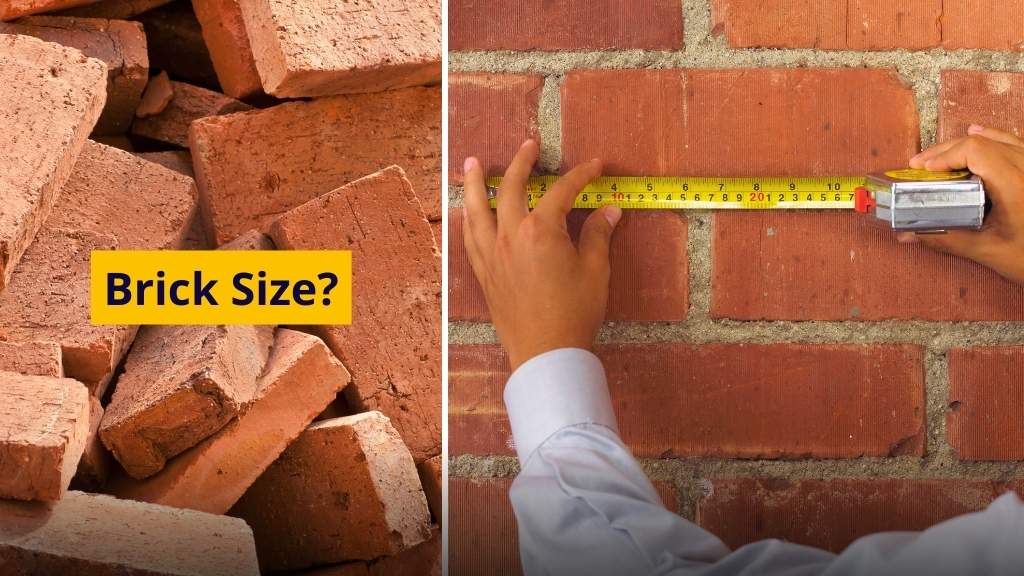
If you’ve ever stood on a dusty construction site at 7 AM, you know that sound, the rhythmic clink-clink of bricks being unloaded from a truck. It’s the literal heartbeat of Indian homebuilding. But most homeowners just see a pile of red blocks, while a seasoned contractor sees a math problem.
I remember talking to a mason in Jaipur who told me, “A wall is only as honest as its first layer.” If your red brick size is off by even half a centimeter, your windows won’t align, your plaster will be twice as thick, and your budget will start leaking money.
Whether you’re building a backyard wall or your “forever home,” you need to know what is the size of a brick before the first bag of cement is even opened. In India, we don’t just wing it, we have a standard brick size in india that keeps our cities standing straight. Let’s look at the brick dimensions that actually matter when you’re on the ground.
In India, we follow guidelines set by the BIS (Bureau of Indian Standards). This ensures that whether you are in Delhi or Bangalore, the brick dimensions stay relatively consistent so that construction calculations don’t go haywire.
The official standard brick size in india is known as the Modular Brick.
| Brick Type | Size (Length × Width × Height) |
| Modular Brick | 190 mm × 90 mm × 90 mm |
| Modular Brick (With Mortar) | 200 mm × 100 × 100 mm |
| Non-Modular Brick (Traditional) | 230 mm × 110 mm × 70 mm (Approx) |
Why do we use modular bricks? They are basically designed to be “math-friendly.” When you add the 10mm mortar joint, the brick dimensions in india become nice round numbers like 20cm x 10cm x 10cm, making it way easier to calculate how many bricks you need for a 10-foot wall.
Please note: These sizes may vary slightly depending on the specific manufacturer or region in India.
If you’re talking to a local mason (the mistri), he probably won’t talk in millimeters. He’ll talk in inches or centimeters. If you are searching for what is the size of a brick, you need to know the conversion to avoid confusion on-site.
| Unit | Standard Red Brick Size | With Mortar Joint |
| Millimeters (mm) | 190 × 90 × 90 | 200 × 100 × 100 |
| Centimeters (cm) | 19 × 9 × 9 | 20 × 10 × 10 |
| Inches (in) | 7.48 × 3.54 × 3.54 | 7.87 × 3.93 × 3.93 |
Note: In many parts of North India, the “Traditional Brick” (9 x 4.5 x 3 inches) is still more common than the modular one, so always check what your local kiln is firing.
Even though there is a standard red brick size, the reality at the kiln is a bit different. Bricks are made of clay and baked in high-heat kilns.
That’s why experienced masons always “dry stack” a few bricks before starting a red brick wall. It helps them adjust the mortar thickness early on so the wall stays level.
When an engineer calculates the number of bricks for your house, they don’t look at the standard brick size in india of 190mm. They look at the 200mm (nominal size).
Why? Because a brick never sits alone. It’s always wrapped in a 10mm layer of cement and sand (mortar).
This “extra” 10mm is vital. If your red brick size is too small, you end up using more cement, which is way more expensive than the bricks themselves!
It’s interesting to see how what is the size of a brick changes when you cross borders.
| Country | Standard Brick Size (mm) |
| India (Modular) | 190 × 90 × 90 |
| USA | 203 × 92 × 57 |
| United Kingdom | 215 × 102.5 × 65 |
| Australia | 230 × 110 × 76 |
India’s modular red brick size is actually quite compact compared to the UK or Australia. This makes them easier to handle for high-volume masonry work.
Don’t just trust the truck driver when he says it’s the standard red brick size. Do these quick checks:
Even with concrete blocks and AAC blocks becoming popular, the red brick wall is a survivor. It handles the Indian heat beautifully and has high “thermal mass”, meaning it keeps your house cooler in the summer.
Plus, the brick dimensions in india allow for a lot of flexibility in design. You can create arches, jali work, and exposed walls that blocks just can’t mimic. And let’s be honest, an exposed red brick wall with a bit of varnish looks better than any wallpaper!
At the end of the day, understanding what is the size of a brick is the foundation of a good build. Following the standard brick size in india (190 x 90 x 90 mm) ensures that your walls are structurally sound and your material estimates are accurate.
Whether you are building a small compound wall or your dream home, make sure you stick to modular brick dimensions whenever possible. It saves cement, saves time, and prevents those annoying “why is my wall tilted?” conversations with your contractor.
And remember, a wall is only as strong as the bond between the bricks, so use good quality cement (like JK Cement) and make sure your curing is done right!