Difference Between Kutcha & Pucca Houses: Features, Materials Used, Pros & Cons
September 16, 2026
The difference between a kutcha house and a pucca house mainly depends on the materials used to construct the walls…

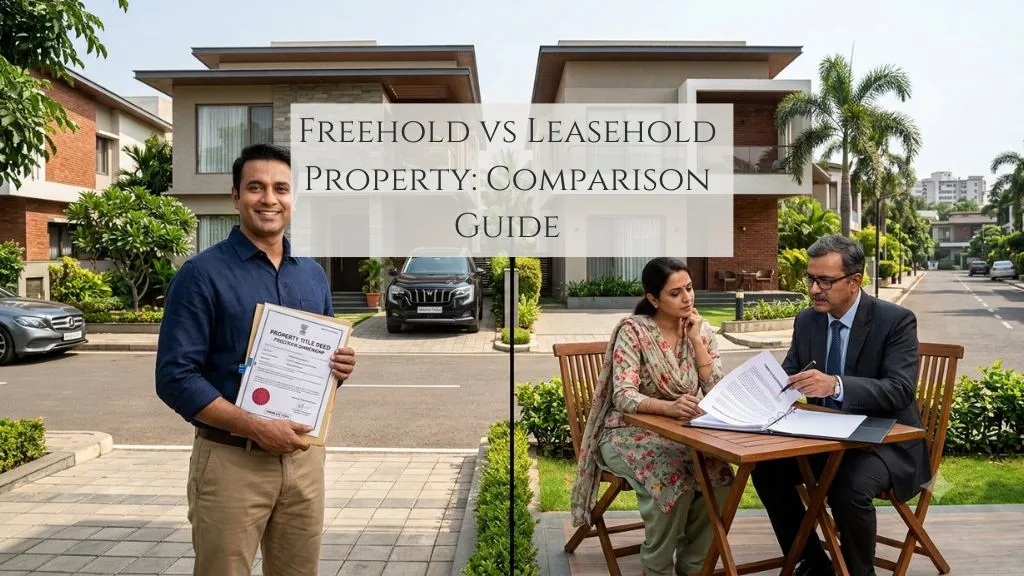
Buying a property is one of the biggest financial decisions you’ll ever make. Yet many buyers overlook one crucial detail—the type of ownership. While two homes may look identical, one could be freehold and the other leasehold, significantly affecting your ownership rights, resale value, financing options, and long-term investment returns.
If you’re planning to buy a house, apartment, or plot in India, understanding the difference between freehold vs leasehold property is essential. This guide explains what each ownership type means, their advantages and disadvantages, and which option is the smarter choice in 2026.
Let’s start with the big one. What is the actual freehold ownership meaning?
Buying a freehold property means you own the building and the piece of land it stands on, completely, permanently, and outright. There is no landlord above you, and no ground rent bills coming in the mail.
If you buy a freehold house or apartment in cities like Bangalore, Hyderabad, or Chennai, it belongs to you indefinitely. You can keep it forever, renovate it, rent it out, or pass it down to your kids and grandkids without asking anyone for permission.
Key Takeaway: Freehold gives you absolute, 100% control over the property. It’s the gold standard of real estate titles in India.
Now, what is the leasehold property meaning?
When you buy a leasehold property, you own the right to live in or use the building for a specific period of time, usually 30, 60, or 99 years. However, you do not own the land beneath it. The land belongs to a freeholder, which is often a government housing board (like DDA in Delhi or BDA in Bangalore) or a private trust.
Once that 99-year timer runs out, the ownership of the property technically goes straight back to the landowner, unless you pay a fee to extend or renew the lease.
You will often see leasehold properties in government-allotted plots, industrial zones, or specific planned city sectors.
To help you visualize the freehold and leasehold property difference, here is a simple breakdown:
| Feature | Freehold Property | Leasehold Property |
| Land Ownership | You own the land and structure 100% | Land belongs to the freeholder (Government/Trust) |
| Duration | Indefinite (Forever) | Fixed term (30, 60, or 99 years) |
| Ground Rent | ₹0 (No ground rent ever) | Annual ground rent usually required |
| Bank Loans | Super easy approval with any bank | Tougher to get loans if lease has under 30 years left |
| Renovations | Total freedom (following local bylaws) | Needs written permission from the landowner |
| Resale Value | Increases steadily over time | Can drop significantly as the lease nears expiry |
This is the #1 question everyone asks: “If I buy a 99-year leasehold flat, what happens when time runs out?”
In theory, the land and building revert back to the original landowner. But in actual practice across India, two things usually happen:
Hands down, freehold is the better choice for 95% of homebuyers.
Here is why:
If a property is located in a ultra-prime city center where freehold land literally doesn’t exist, or if the upfront purchase price is significantly lower and fits a specific short-term investment goal, leasehold can be a practical option.
At the end of the day, knowing what is freehold ownership vs leasehold keeps you from making expensive mistakes. If you want a forever home to pass down through generations, always go for freehold!